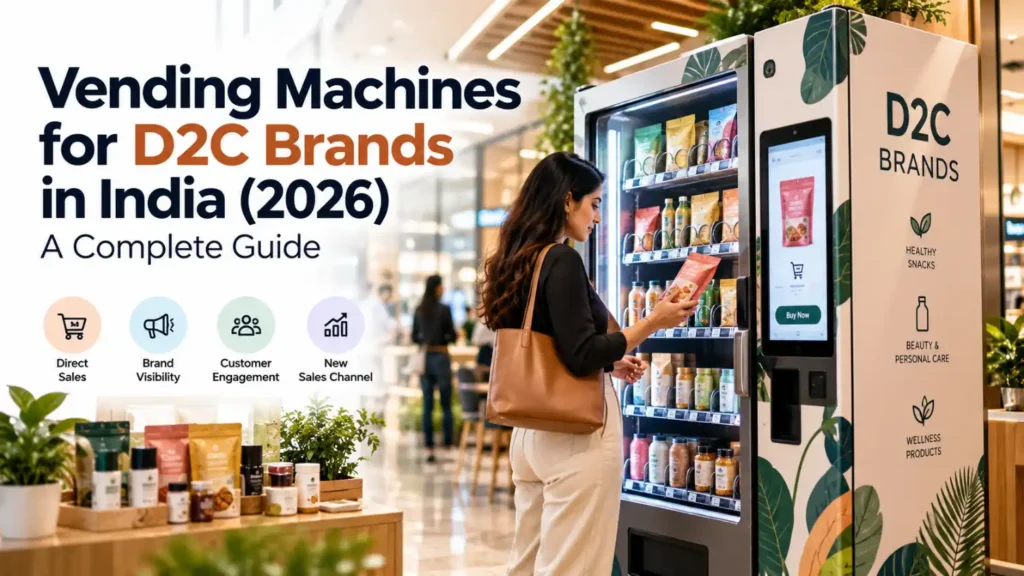
Vending machines are one intriguing method that can make this happen for India’s burgeoning direct-to-consumer (DTC) brands. Online platforms can help brands connect with customers, but having a physical presence can enhance product discovery and visibility. But renting retail outlets involves a lot of capital to open up a store, hire employees and pay for daily expenses.
A D2C brand vending machine is a better option. It enables enterprises to sell products in offices, sport centers, malls and other places with high traffic without operating a store.
Healthy snacks, beverages, beauty products, and much more automated retail can help to build Brand Awareness, product sampling and offline sales. This guide outlines the ways D2C companies can leverage vending machines to boost offline growth smartly in 2026.
What Is a Vending Machine for D2C Brands?
A D2C vending machine is a self-service retail machine that dispenses a brand’s products directly to the customer. It is typically set up in areas with high volumes of visitors and may incorporate customised branding, digital payment systems, and product displays, enabling businesses to offer an easy shopping expertise without running a physical store.
In contrast to conventional vending machines that have several different brands, a branded vending machine can be based on the identity and product range of a brand.
For instance, there may be a healthy snack company that has a machine with their protein bars, millet snack bars and packaged foods. The customers can browse the products, make payments and pick up purchases in mere minutes.
The idea is to get the physical product to be seen while also allowing for automated shopping.
Why Are D2C Brands in India Using Vending Machines in 2026?
The vending concept is being looked at by D2C businesses as an alternative way to reach offline customers, but without the need to establish a retail presence. Automated machines can be used for direct sales, brand promotion, location tests, and to minimize permanent salespeople in each location.
There are a number of reasons why vending is appealing.
1. Offline presence without retail stores
Brands can use a machine to showcase and sell products in specific places without the need to rent an entire store. Small-scale offline expansion could be more easily tested this way.
2. Convenient cashless shopping
Digital payment methods, such as UPI, can be enabled using smart machines. If the premises are open, the sites are open for sales during the day or night.
3. Stronger brand visibility
Vending machines can become physical advertising spaces by customization with logos, colours, and digital screens.
4. Testing new markets
Brands can test the demand for the product in offices, colleges, or cities before investing in bigger retail outlets.
5. Better sales insights
Businesses can use compatible smart machines to determine sales and inventory information and understand which products are performing well at which location.
These features are suitable for a growing D2C business to make vending a feasible channel to explore offline.
Which D2C Product Categories Work Best in Vending Machines?
Compact, well-packaged, easy-to-dispense and appropriate to the machine’s storage environment products perform well in automated retail. Potential categories include healthy snacks, packaged beverages, fitness nutrition, and selected personal-care products – the machine must be set up accordingly.
| Category | Example Products | Suitable Locations |
| Healthy snacks | Grain cookies, nuts, granola bars | Offices, colleges |
| Beverages | They include bottled juices, coconut water, and cold drinks | Malls, hospitals |
| Fitness nutrition | Protein bars, energy snacks are options to consider. | Gyms, fitness centres |
| Beauty and personal care | Mini skincare products, travel-size essentials | Malls, airports |
| Convenience products | Basics for cleanliness, accessories in packages. | Campuses, transit hubs |
The first step in a D2C brand vending machine India strategy should be the products that customers can buy in a blink.
There are additional factors of packaging strength, product size, shelf life, temperature range, and dispensing compatibility to take into account before choosing a machine.
Where Should D2C Brands Place Vending Machines?
There are additional factors of packaging strength, product size, shelf life, temperature range, and dispensing compatibility to take into account before choosing a machine.
The ideal vending spot is where the brand’s intended customers are always around and have a need for the brand’s product. While high footfall is a plus, audience relevance, machine accessibility, and customer purchasing habits are also key considerations for choosing a location.
Corporate offices and technology parks may work well for healthy snacks, beverages, and quick refreshments. Gyms may be a good place for protein bars and fitness products, or for colleges for more affordable packaged snack items.
Other places like hospitals, malls, airports, and metro station access points can be designated to provide potential customer access, if approved in advance.
Before installing, businesses should consider the demographic of their customers, their expected demand, how much time they are in town, and whether they have access to the store to replenish supplies.
How Can D2C Brands Use Vending Machines for Product Sampling?
A product sampling vending machine enables a brand to market selected products using free samples, a promotion, or a discounted trial pack. It is useful during product launches, marketing campaigns, and customer awareness activities etc and if the brands want consumers to experience a product before making a better purchase.
A snack company could give away sample packs at a corporate setting or fitness occasion, for instance.
Brands can also get customer feedback through QR codes or provide a survey for optional feedback to better understand customers’ preferences. All personal data collection should be conducted in compliance with any privacy and consent regulations.
Effective monitoring of sampling campaigns is needed to gain insight into participation, customer feedback and customer interest in purchasing after the sampling.
How to Launch Your D2C Brand in a Vending Machine?
There’s more to create a vending channel than just putting a machine up. Brands need to determine appropriate products, get to know their customers and find compatible equipment and a secure payment, replenishment and maintenance system.
Step 1: Choose the Product Range
Start by using a few simple products that may be stored and dispensed easily. Take into consideration size of package, storage period, demand and selling price.
Step 2: Select the Machine Type
Various machines are suitable for various products. Common options include:
- Spiral vending machines: It is good for many packaged snacks and light items.
- Smart vending machines: May provide electronic payments, interactive and connected displays, and monitoring.
- Combo vending machines: These can be advantageous to businesses selling complementary products side by side.
The right selection will be based on the product size and storage and dispensing requirements.
Step 3: Design the Branded Wrap
Keep using brand colours, logos, visuals of products and simple text. Using a consistent design can benefit the customer in that they will recognise the brand and understand what products are on offer.
Step 4: Pick Suitable Locations
Select places suitable to the target audience and verify availability of space, electricity, permissions, hours of availability, and arrangements for operations.
Step 5: Track Sales and Inventory
Remote monitoring assists businesses in evaluating product sales, where supported, identifying stock shortages, and making plans for replenishing.
Vending machine brands should have regular performance reviews. They can make a major contribution to deciding if a place, product assortment/promotion mix should be modified.
Should D2C Brands Buy or Rent a Vending Machine?
Purchase is usually appropriate for companies that want to have more control over their machines and that anticipate long-term machine ownership. For smaller brands, pilot campaigns, or businesses experimenting with a new location without significant capital expenditure, renting might be a better option.
This will depend on the commercial arrangement and the responsibilities for day-to-day operations.
| Factor | Buying | Renting |
| Upfront cost | Higher initial investment | Usually lower |
| Maintenance | Owner’s responsibility unless contracted | Based on rental agreement |
| Flexibility | Durable for extended periods of time | In many cases, it is preferable to use these for testing. |
Do some comparisons before you make your decision: installation, branding, servicing, restocking, revenue-sharing, terms of contract.
Rental agreements should also define the responsibilities for losses, repairs, and relocations of products.
Why Choose Unicorn Vending for Your D2C Brand?
Unicorn Vending provides you with smart vending solutions, customisable vending branding, cashless payment solutions, installation and maintenance services. Its linked monitoring features additionally make it easier for companies to manage automated product sales, with support available for back-end machines.
These features can aid product visibility, ease of buying, and managing the business for D2C businesses looking into the offline retail segment.
Brands can reach out to the company’s Sell With Unicorn Vending page to speak about product placement and partnership opportunities.
Conclusion
For D2C brands, vending machines provide a chance to marry online expansion with offline experiences. Automated retail can help in a variety of ways, including product discovery, sampling, and even easy selling, that do not require the investment of a brick-and-mortar store. But it’s crucial to choose products, locations, equipment, and an operating approach that work.
When backed by regular stock monitoring, customer payment convenience, and performance tracking, a vending machine for D2C brands can be a valuable additional sales channel.
It is important to select the right vending partner for introducing new products or testing offline demand. Unicorn Vending offers tailor-made smart vending machines for companies that are testing automated vending machines.
Frequently Asked Questions
Can a small D2C brand start with a single vending machine?
Yes, using a single machine can be useful for a small brand to test out the market demand before going any further. Select a suitable site, have a small assortment of products, and track the performance.
Can vending machines be customised with brand graphics?
Yes, many vending solutions can be customized with wraps, brand logos, colours and promotional graphics. The possibilities for customisation will vary according to the machine model and supplier.
Do D2C vending machines accept UPI payments?
Yes, smart vending machines with UPI-enabled payment options can process UPI payments. Depending on the machine configuration, some machines also have card and digital wallet support.
How do brands track sales from a vending machine?
Digital sales reports, inventory, and transaction information can be provided from connected machines. They are useful for businesses to make informed decisions on stocking preferred items and assessing where products are likely to sell best.