Have you ever used an automatic snack or drink dispenser in an airport, at your office, or in a metro station? If so, you have used a vending machine. What is a vending machine? How does it function? And why are businesses so fast to start using them in 2026?
This is a comprehensive guide that breaks down everything you need to know about vending machines, including their definition, types, working mechanisms, benefits, and how smart vending machines are revolutionizing automated retail in India.
What is a Vending Machine?
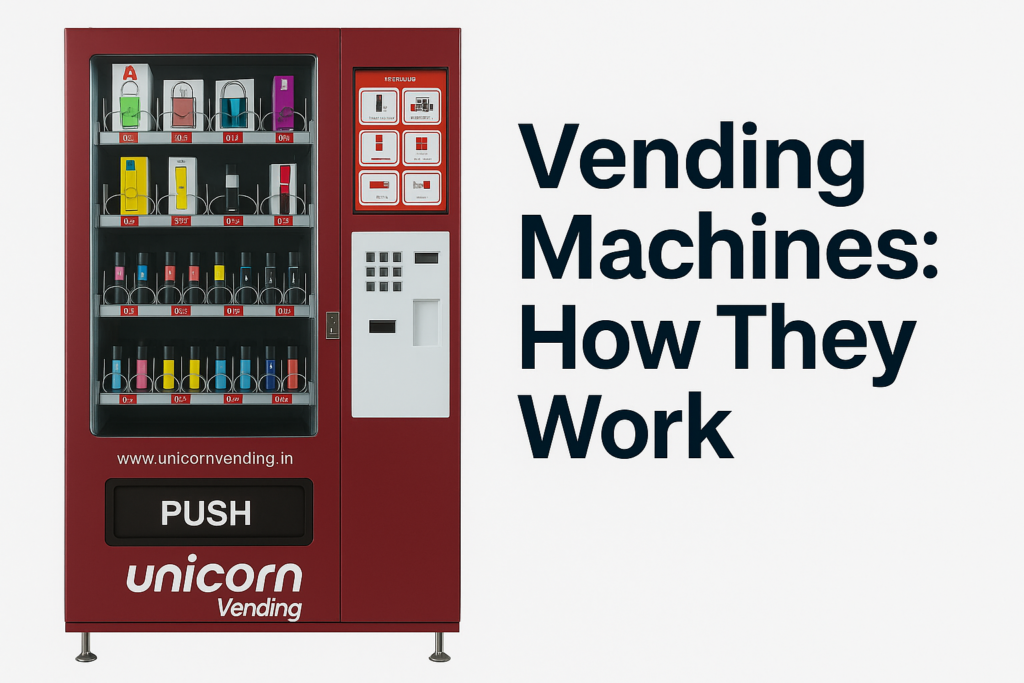
A vending machine is a type of automated machine that dispenses products, such as snacks, drinks, food, and other goods, in exchange for payment, without any human assistance.
Users just choose their item, pay (via cash, UPI, card, or mobile wallet), and the machine dispenses the item immediately. Vending machines are among the most accessible forms of retail today and are open for business around the clock, every day.
Feature | Details |
Operating hours | 24/7 — no staff needed |
Payment methods | Accept all of the following payment methods: Cash, UPI, QR code, Debit/Credit Card, Mobile Wallet |
Product variety | Snacks, drinks, fresh food, millet-based products, hygiene products |
Space required | The 7-9 sq. ft. option is for one person to enjoy on their own. |
Suitable locations | Offices, hospitals, colleges, malls, metro stations, airports |
How Does a Vending Machine Work?
Modern vending machines use a straightforward yet clever method to provide customers with items. It’s actually the following steps:
Step | Action | What Happens |
1 | Customer selects product | A display on the machine that allows for touchscreen or keypad selection |
2 | Payment is made | Customer makes the payment using UPI, card, cash, or QR code |
3 | Payment verified | The machine confirms a transaction in real time |
4 | Product dispensed | A motor/elevator mechanism is used to release the selected item |
5 | Change returned (if cash) | Exact change is returned automatically if needed. |
6 | Inventory updated | Smart machines can update stock levels in real time using IoT |
Unicorn Vending’s advanced smart vending machines also offer functionality such as IoT-based monitoring, app-based control, and automatic refill notifications, ensuring a completely hands-free experience for business owners.
Types of Vending Machines Available in India
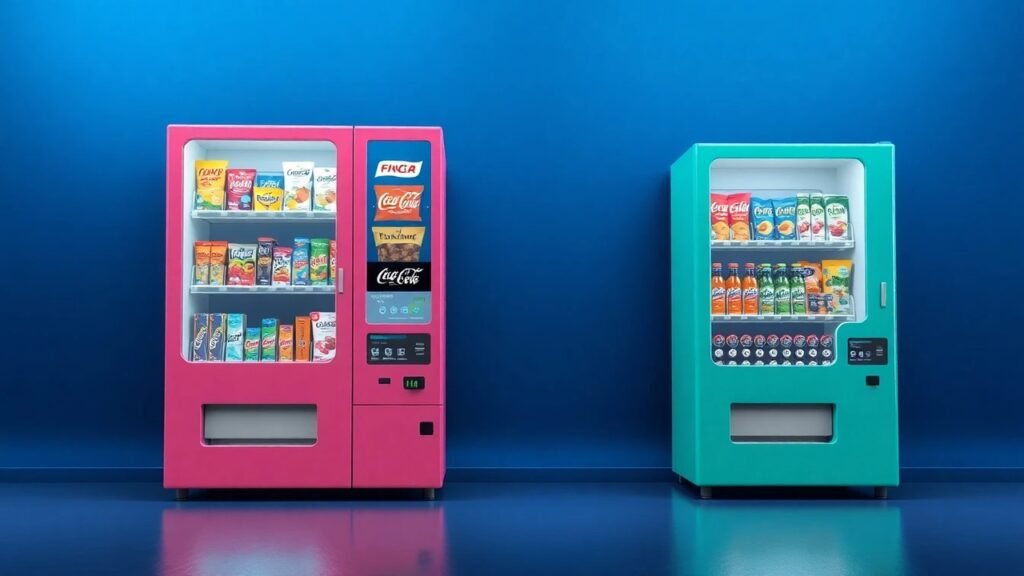
The Indian vending machine market is a growing market. The following are the most common types of vending machines for 2026
Type | Products Dispensed | Best Suited For |
Snack Vending Machine | Chips, dry fruits, biscuits, protein bars, 100% protein snacks, protein bars, nut bars, millet snacks | Offices, Colleges, Gyms, Hospitals |
Beverage Vending Machine | Cold drinks, juice, water bottles, energy drinks | The mall, metro stations, and offices |
Coffee Vending Machine | Hot Coffee, Tea, Cappuccino, Hot Chocolate | Corporate offices and co-working places |
Combo / Smart Vending Machine | Combined snack and beverage machine | High-footfall locations, campuses |
Healthy Food Vending Machine | Millet foods, fresh fruits, oatmeal, low calorie snacks | Personal care services units and hospitals |
Industrial Vending Machine | Tools, PPE, spare parts, and safety elements | Factories, manufacturing units |
Sanitary / Hygiene Vending Machine | It is a vending machine that dispenses sanitary / hygiene products, masks, sanitizers, and sanitary napkins. | Sites including malls, metro stations, and hospitals |
Major Sectors Using Vending Machines in India
One of the most widely used tools offered to employees is the vending machine. They offer nutritious foods and drinks around the clock without the need for a canteen or cafeteria employee.
1. Corporate Offices and Workplaces
- Reduces canteen queues by 20-30 minutes per transaction, saving employees 20-30 minutes
- Companies can subsidise employees’ snacking through the corporate billing feature.
- Healthy foods improve staff efficiency and morale.
2. Hospitals and Healthcare Facilities
Vending machines are used to dispense fast food and beverages in hospitals around the clock, which is why they are necessary for doctors, nurses, patients, and visitors who need a snack or drink at any time of day.
- Hygienic & contactless dispensing — crucial in a medical setting
- Health-conscious employees in the hospital will have access to healthy food choices
- Uses only 7-9 sq. ft. in waiting areas and hallways
3. Colleges and Educational Institutions
Having easy food and beverage access during class and study breaks makes a tremendous difference for students and faculty.
- Eliminates the need for students to go off campus for snack time
- Promotes good nutrition using millet and nutritious foods
- Open 24 hours a day for use by hostel students and for late-night study
4. Airports, Metro Stations, and Transport Hubs
Vending machines work well at high-traffic transit spots. Travellers must have easy and convenient access to food, beverages, and essentials without having to queue for long.
5. Shopping Malls and Retail Spaces
The mall vending machine is a fast and convenient self-service counter for malls, eliminating the reliance on food courts.
Key Benefits of Vending Machines for Businesses in India
Benefit | Details |
Zero staffing required | No cashier or attendant is required — it’s fully automated |
24/7 availability | Works overtime to make money |
Low operational cost | No rent charge for large canteen space – only 7-9 sq ft |
Cashless payments | Safeguards cash handling by using UPI, QR, and card support |
Real-time monitoring | Machines equipped with IoT technology monitor inventory levels remotely |
Customisable inventory | Keep products available based on employee or customer interests |
Healthy food options | A variety of snacks with millet, fruits, and low calories are offered |
Brand visibility | Corporate clients may have their machine exterior customized for their branding. |
What Makes a Smart Vending Machine Different?
In the past, vending machines were available and only accepted coins and gave out products. Smart vending machines are the future of vending in India for 2026, providing a much-improved vending experience:
- UPI, QR Code, and mobile wallet payments – 100% Cashless
- Temperature, inventory, and real-time monitoring sensors that connect to IoT.Real-time inventory and temperature monitoring sensors connected to IoT.
- App-based management — All machines managed from a single dashboard.
- Avoiding manual stock checking with automated refill alerts.
- Wireless price updates — adjust prices or offers from a distance.
- Analyse sales — find out which products are selling best at what time
- Custom branding — The exterior machine can be branded for corporations and institutions
How to Start a Vending Machine Business in India
The vending machine industry is among India’s most rapidly expanding small business ventures of 2026, with low investment and high return. If you’re looking for a simple approach, here it is:
Step | Action | Key Consideration |
1 | Select the appropriate machine type | Snacks and beverages, coffee, combo, or healthy food |
2 | Select high-footfall locations | Offices, hospitals, colleges, malls, and metro stations |
3 | Decide: Purchase, lease, or franchise | Rental is a lower-risk option for those getting started, and franchise offers full support |
4 | Stock products based on location | Millet snacks for the hospital, coffee for the office |
5 | Set up cashless payments | In 2026, UPI, QR, and card support are essential |
6 | Remotely monitor and manage | Implement Internet of Things (IoT) technology with machines to track stocks in real-time.e |
Conclusion
Today in India, vending machines are no longer just coin-operated machines, but are advanced smart retail points equipped with IoT capabilities that dispense hundreds of varieties of items to thousands of customers in a single day.
As a business owner seeking to enhance amenities for their staff, an entrepreneur seeking a new low-investment business opportunity, or an institution seeking a convenient food access solution, vending machines provide a compelling, cost-efficient answer. The vending machine industry in India is expected to grow to USD 1.6 billion by 2030, making it an opportune moment to invest in or implement smart vending machines.