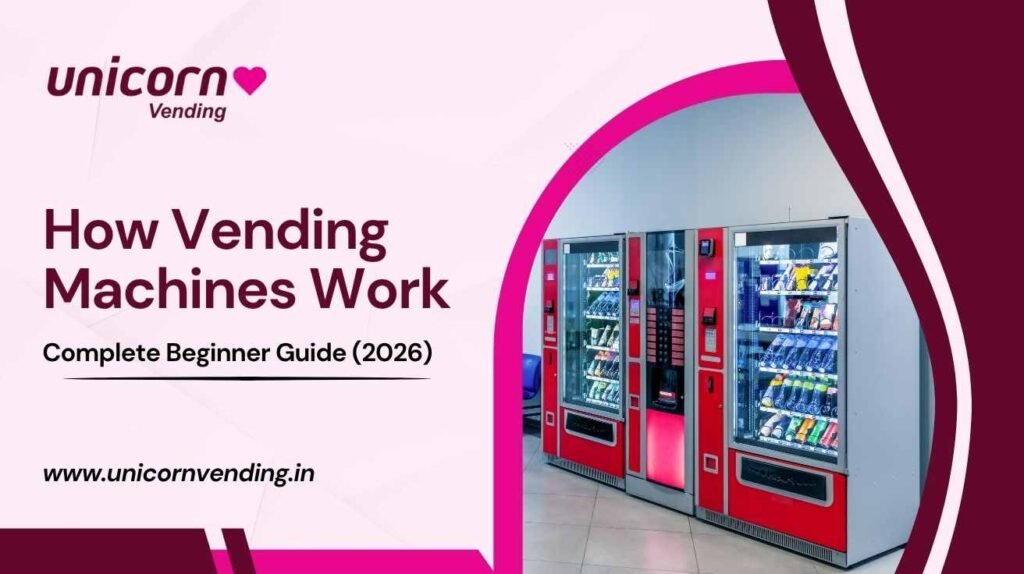
Vending machines are becoming popular in India as people want quick access to snacks, drinks, and even healthy food very quickly without waiting in long lines. Vending machines are quietly becoming part of our daily life because they are present in almost every public place, like offices, hospitals, and malls.
Vending machines operate automatically, which makes them highly efficient for businesses. They reduce the need for manpower and can run continuously without breaks. In this guide, you will learn how vending machines work, their key components, and why their demand is growing rapidly in India.
What is a Vending Machine?
A vending machine is an automated machine made by humans that provides products to customers, such as snacks, drinks, and healthy foods, when the customer selects the product and makes payment for it.
These machines are able to sell snacks, drinks, healthy food, and even cooked food because in modern times, these machines are very much advanced by touchscreens, cashless payment options, and smart tracking systems.
In these types of machines, there is no use of manpower because it handles everything automatically by choosing the product and making payment by consumers.
How Do Vending Machines Work? (Step-by-Step Process)
Step 1: Product Selection
This process starts when a user selects the product, which is done by using buttons or a touchscreen, and each product has a code or a direct select option, which makes it easy for everyone to choose the product from a vending machine supplier.
Step 2: Payment Process
After selecting the product, the machine asks for payment, and modern vending machines support various payment options, such as cash, UPI, debit cards, and mobile wallets. This flexibility makes it easy to use these machines in different locations.
Step 3: Processing & Verification
After payment is made by users, the system verifies whether the payment is successful or not, and then it checks whether the product is available or not in the machine, and after both are confirmed, the process moves forward.
Step 4: Product Dispensing
Now the machines start working internally. In this step, a motor starts and pushes or drops the selected product into the delivery area, which usually takes a few seconds to dispense the product.
Step 5: Transaction Completion
After the product is delivered to the user, machines generate a digital receipt, and then the machine resets the system and becomes ready for the next user by updating the inventory automatically.
Looking for a Reliable Vending Machine Supplier?
Upgrade your workplace with smart vending solutions backed by reliable service, transparent pricing, and quick installation support tailored to your business needs.
Request a Free ConsultationKey Components of a Vending Machine
There are several key components in the vending machine, like the display panel. It acts like the brain of the system, which helps to interact with users by selecting products and handling transaction processes through cash or digital modes.
Storage shelves are the storage units where products are placed, and the delivery system releases the selected items from these storage shelves. Some machines also have cooling or heating systems placed on storage shelves to keep the products hot and cool, depending on the product type.
Modern machines also include smart features like IoT tracking and sensors, which help the machine to monitor the stock levels present in it and also help to analyse the machine’s performance in real time.
Types of Vending Machines
There are different types of vending machines based on what they sell.
- Snack vending machines offer chips, chocolates, and packaged food. Beverage vending machines provide cold drinks, juices, or hot beverages like tea and coffee.
- Healthy vending machines focus on items like protein bars, salads, and low-calorie snacks. Combo vending machines combine snacks and drinks in one unit.
- Smart vending machines go a step further. They include digital screens, smart payments, and even data tracking for better business insights.
Technology Behind Modern Vending Machines
Modern vending machines work on very advanced technology. One of the biggest changes in vending machines is the use of IoT sensors, which allow the real-time tracking of machine performance and stock levels.
In modern vending machines, cashless payments are also a very common and advanced technology built in it due to the rapid growth of UPI in India, because users prefer quick and digital payments over cash.
Modern vending machines also have the feature of giving inventory alerts, which help operators to refill the machine on time. These modern machines are also energy-efficient and reduce power consumption.
Benefits of Vending Machines for Businesses
Vending machines are very beneficial for businesses because they are available every time, they operate 24/7 without breaks, which means customers can buy the products anytime from them.
These systems are very efficient, and it serves the products to customers very quickly without any delays, and from this customer experience is improved by providing convenience.
Vending machines don’t need any manpower to give the products to the customer, which reduces the cost of humans. Over time, vending machines help businesses to increase their sales without increasing any workload.
Where Are Vending Machines Used?
Today, vending machines are used in many places to save time. Offices use these machines to provide snacks and beverages to employees very quickly.
Hospitals are also installing these machines for the visitors and staff who need quick food options. Colleges and gyms are also using them for students and fitness enthusiasts.
Vending machines are almost placed in every public place, like malls, airports, and shops, where people need fast and easy access to products.
Why Vending Machines Are Growing in India
Vending machines are growing rapidly in India because people are shifting towards automation, and businesses want systems that run with less human effort, making the Vending Machine India market expand quickly.
Vending machines are frequently adopted by the people of India because it gives the benefit of cashless payment and makes their payment by UPI and digital methods.
The changing lifestyles of people are also prominent reasons for the growing demand for vending machines because users prefer to receive quick service.
Why Choose Unicorn Vending
Unicorn Vending machines are a reliable vending supplier because they provide machines that support both snacks and healthy food choices, and they provide the flexibility to the users, which means that people can customise the machines based on their needs.
They also offer service and maintenance support to the buyers of vending machines, which ensures that the machines work smoothly after the installation. They provide different-sized options of machines, which is good for both small offices and large commercial spaces.
Also Read This: Unicorn Vending Helped a Corporate Office Save 30% on Pantry Costs
Conclusion
India is a hub of vending machines that are modernizing how businesses can support customers, combining convenience, automation, and productivity. With advanced Unicorn Vending machines, companies may offer different types of snacks, beverages, and also some healthy items continuously without raising any workforce. The unification of digital payments, IoT-based monitoring, and automated dispensing systems confirms fluent operations, perfect digital inventory optimisation, and improved consumer satisfaction.
In India, the public is adopting modern lifestyles rapidly, and for that reason, the public demands fast services and is moving towards digital retail services, which makes vending machines an important addition for public places like offices, hospitals, gyms, and malls. Businesses approving Unicorn Vending solutions can lessen the price, upgrade service speed, and provide a superior customer experience. Improve your retail operations and embrace automation today.
Looking for a Reliable Vending Machine Supplier?
Upgrade your workplace with smart vending solutions backed by reliable service, transparent pricing, and quick installation support tailored to your business needs.
Request a Free ConsultationFAQs
1. How do vending machines work?
Vending machines allow users to select the product, make a payment, and after that user automatically receives their product through an internal delivery system.
2. What payment methods are available?
Vending machines have various methods to make payment, such as cash, UPI, debit cards, and mobile wallets, for easy and flexible payment.
3. Are vending machines profitable?
Yes, vending machines are profitable when choosing the right location to place, product selection, and regular maintenance.
4. What products can be sold?
Snacks, beverages, healthy food, and ready-to-eat foods can be sold through the vending machines.
5. Do they need maintenance?
Yes, vending machines need regular maintenance like regular cleaning, regular refilling, and basic servicing on time, all of which are needed to keep the machine running smoothly.